If You're in Crisis Right Now
Call or text 988 – The Suicide & Crisis Lifeline is available 24/7 for immediate support.
Call 911 if you or someone else is in immediate physical danger.
TSG Crisis Support: Contact us at https://tsgbh.com for information about our behavioral health urgent care services.
As we move deeper into 2026, many of us made resolutions to prioritize our mental health. But what happens when a mental health crisis strikes at night, on a weekend, or during a moment when your regular therapist isn't available? Knowing exactly where to turn can be the difference between getting the right care quickly and spending hours in an overwhelmed emergency room.
I'm Dr. Kerry L. Shipman, CEO of TSG Behavioral Health & Community Services, and I've seen firsthand how confusion about mental health emergency options can delay critical care. Tonight, I want to clear up that confusion and give you a roadmap for making the best decision when minutes matter.
Understanding What Qualifies as a Mental Health Emergency
Not every difficult moment requires emergency intervention, but certain situations demand immediate professional support. A mental health emergency typically involves:
Thoughts of suicide or self-harm
Plans or intent to hurt yourself or others
Severe panic attacks that won't subside
Psychotic episodes including hallucinations or delusions
Extreme agitation or violent behavior
Substance use complications affecting mental state
Severe anxiety or depression that makes functioning impossible
If you're experiencing any of these symptoms, you need professional help, and you need it now. The question isn't whether to seek help, but where to go to get the most appropriate care.

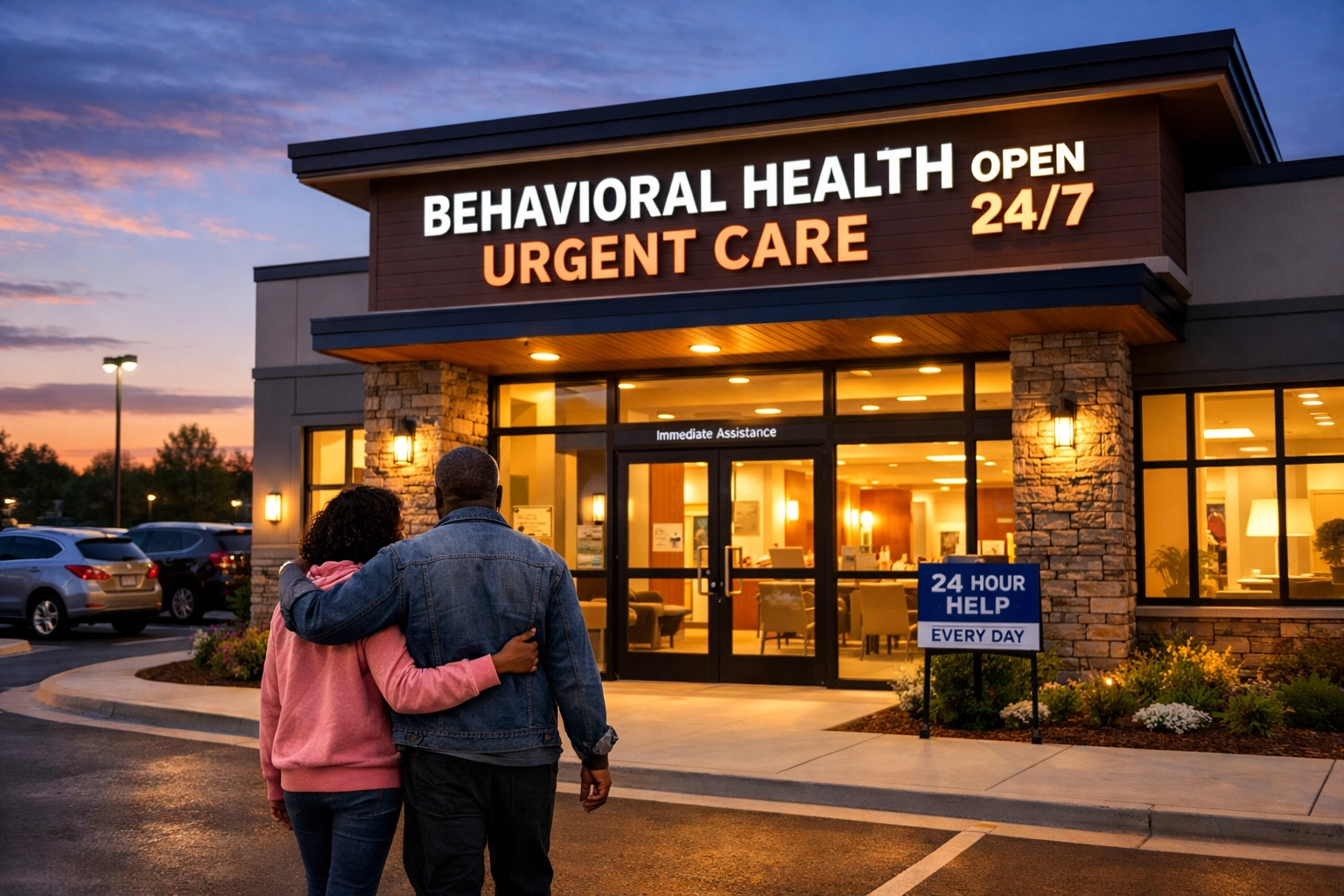
Behavioral Health Urgent Care: Your First-Line Option
Behavioral health urgent care centers represent a newer, more specialized approach to mental health crises. These facilities are specifically designed to handle psychiatric emergencies without the chaos and long wait times of traditional emergency rooms.
What makes behavioral health urgent care different?
These centers employ mental health professionals, psychiatrists, psychiatric nurse practitioners, licensed therapists, and crisis counselors, who specialize exclusively in mental health and substance use crises. The entire environment is designed for psychological stabilization rather than medical trauma.
Services you can expect:
Immediate psychiatric evaluation and risk assessment
Crisis intervention therapy and de-escalation support
Medication evaluation and management
Safety planning and discharge coordination
Referrals to ongoing care and community resources
Connection to telehealth follow-up services
Wait times and accessibility:
Most behavioral health urgent care centers see patients within minutes to an hour, compared to the three to eight hours you might spend in a general emergency room. The atmosphere is calmer, more private, and designed to reduce the stigma many people feel when seeking mental health support.
At TSG Behavioral Health & Community Services, our integrated care model means we can coordinate your urgent care visit with ongoing therapy, medication management, and community support services, ensuring you don't fall through the cracks after the immediate crisis passes.

The Emergency Room: When It's the Right Choice
The traditional hospital emergency room remains the appropriate choice for certain situations. If your mental health crisis involves any of the following, head to the ER:
Medical complications requiring immediate intervention (overdose, serious injury, severe intoxication)
Combined physical and psychiatric emergencies
Situations requiring involuntary commitment or legal intervention
Lack of access to a behavioral health urgent care facility in your area
Emergency rooms have the medical equipment, staff, and legal infrastructure to handle complex situations where mental health intersects with physical health. However, they're also designed for medical emergencies first, which means psychiatric patients often wait longer and may not receive specialized mental health care.
The reality of ER mental health care:
You may wait hours before seeing a mental health professional
The environment can be overstimulating and increase distress
Privacy is limited in busy emergency departments
Continuity of care and follow-up coordination may be lacking
Costs are typically higher than specialized behavioral health facilities
This doesn't mean ERs provide poor mental health care, many have excellent psychiatric teams. But the environment and structure aren't optimized for psychiatric crises the way behavioral health urgent care centers are.
Making the Decision: A Quick Guide
Use this framework to decide where to go tonight:
Choose Behavioral Health Urgent Care if:
Your crisis is primarily psychiatric (suicidal thoughts, severe anxiety, psychotic symptoms)
You're not experiencing medical complications
You can safely transport yourself or have someone drive you
A facility is accessible in your area
You want specialized mental health treatment in a quieter setting
Choose the Emergency Room if:
You've overdosed or injured yourself
You're experiencing both medical and psychiatric symptoms
You need immediate medical stabilization
You require law enforcement or emergency medical services
No behavioral health urgent care is available nearby
TSG's Integrated Approach: Beyond the Crisis
One of the biggest problems with traditional crisis care is the gap that follows. You get stabilized, receive a discharge plan, and then you're on your own to find a therapist, schedule appointments, and navigate insurance, all while still in a vulnerable state.
This is where TSG Behavioral Health & Community Services takes a different approach. Our integrated care model means your crisis care connects seamlessly to ongoing support:
Whole-person care coordination:
When you access our services, you're not just getting crisis intervention, you're entering a coordinated system of care. Our team includes therapists, psychiatrists, case managers, and peer support specialists who work together to address your mental health, physical health, and social needs.
Telehealth convenience for follow-up:
Starting the new year with better mental health means having support that fits your life. After a crisis, you can continue therapy through our telehealth platform, eliminating transportation barriers and making it easier to stick with treatment during this critical transition period.
Community and social support:
Mental health doesn't exist in isolation. Our programs connect you to community resources, support groups, and social services that address the broader factors affecting your wellbeing, housing stability, employment support, and family services.

The New Year Resolution You Actually Need
This year, instead of resolving to "be less stressed" or "worry less," make a concrete plan for mental health emergencies. This proactive approach is the kind of resolution that actually protects your wellbeing:
Save these numbers now:
988 Suicide & Crisis Lifeline (call or text)
TSG Behavioral Health crisis line: https://tsgbh.com
Your local behavioral health urgent care location and hours
Research your options before you need them:
Identify the nearest behavioral health urgent care facility
Know which emergency rooms in your area have dedicated psychiatric units
Understand your insurance coverage for crisis services
Create a personal crisis plan:
List your warning signs of crisis
Identify trusted people who can help you get to care
Write down which medications you take
Note any previous psychiatric hospitalizations or treatments
Keep this information accessible, in your phone, wallet, or shared with a trusted friend or family member.
When Waiting Until Tomorrow Isn't an Option
Mental health crises don't respect business hours or holiday schedules. The systems we've built to support people in crisis should reflect that reality. Whether you choose behavioral health urgent care or a traditional emergency room, the most important thing is that you seek help when you need it.
At TSG Behavioral Health & Community Services, we're committed to making mental health care accessible, integrated, and responsive. Our team understands that a crisis is just one moment in your larger mental health journey, and we're here to support you through the emergency and far beyond.

Your Next Step
If you're reading this during a calm moment, use this time to prepare. Save the 988 number in your phone. Research your local options. Talk to your family about mental health emergencies.
If you're reading this because you're struggling right now, please reach out. Call 988. Visit your nearest behavioral health urgent care. Go to the emergency room if needed. You deserve support, and help is available.
For more information about TSG's integrated behavioral health services, telehealth options, and community programs, visit us at https://tsgbh.com. Making mental health care accessible isn't just our mission: it's our commitment to every person we serve.
Dr. Kerry L. Shipman is the CEO of TSG Behavioral Health & Community Services, where she leads a team dedicated to providing integrated, accessible mental health care across North Carolina.